EV+ Level 2 deployment in one sentence
The property pays no upfront installation cost, pays a monthly subscription fee per charger, and keeps 80% of charging revenue — EV+ funds, installs, and operates everything, backed by 99.7% uptime across 43 states.
Installing Level 2 for a commercial client?
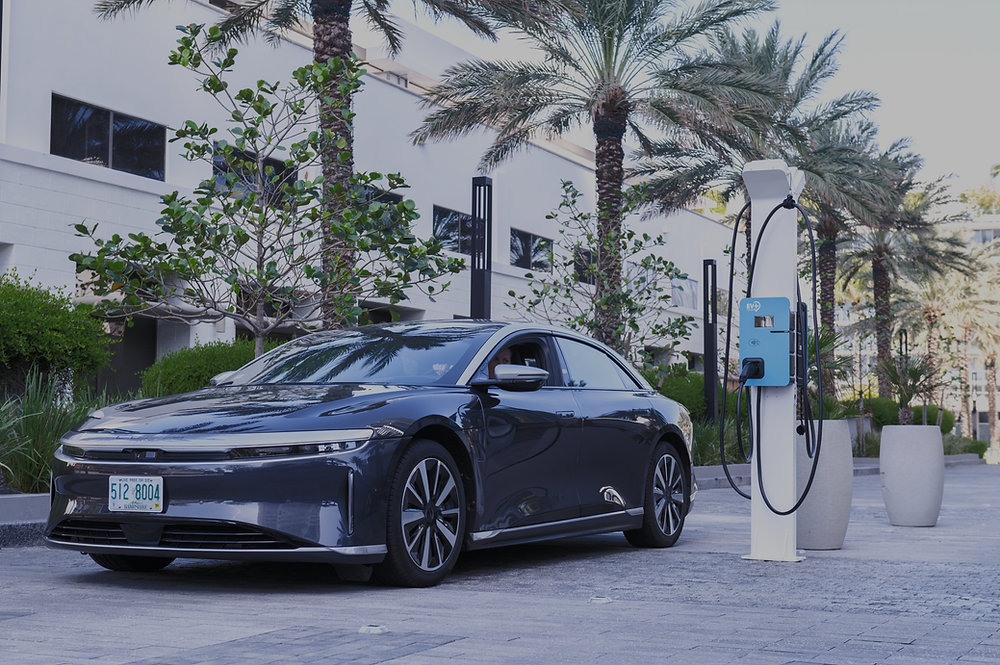
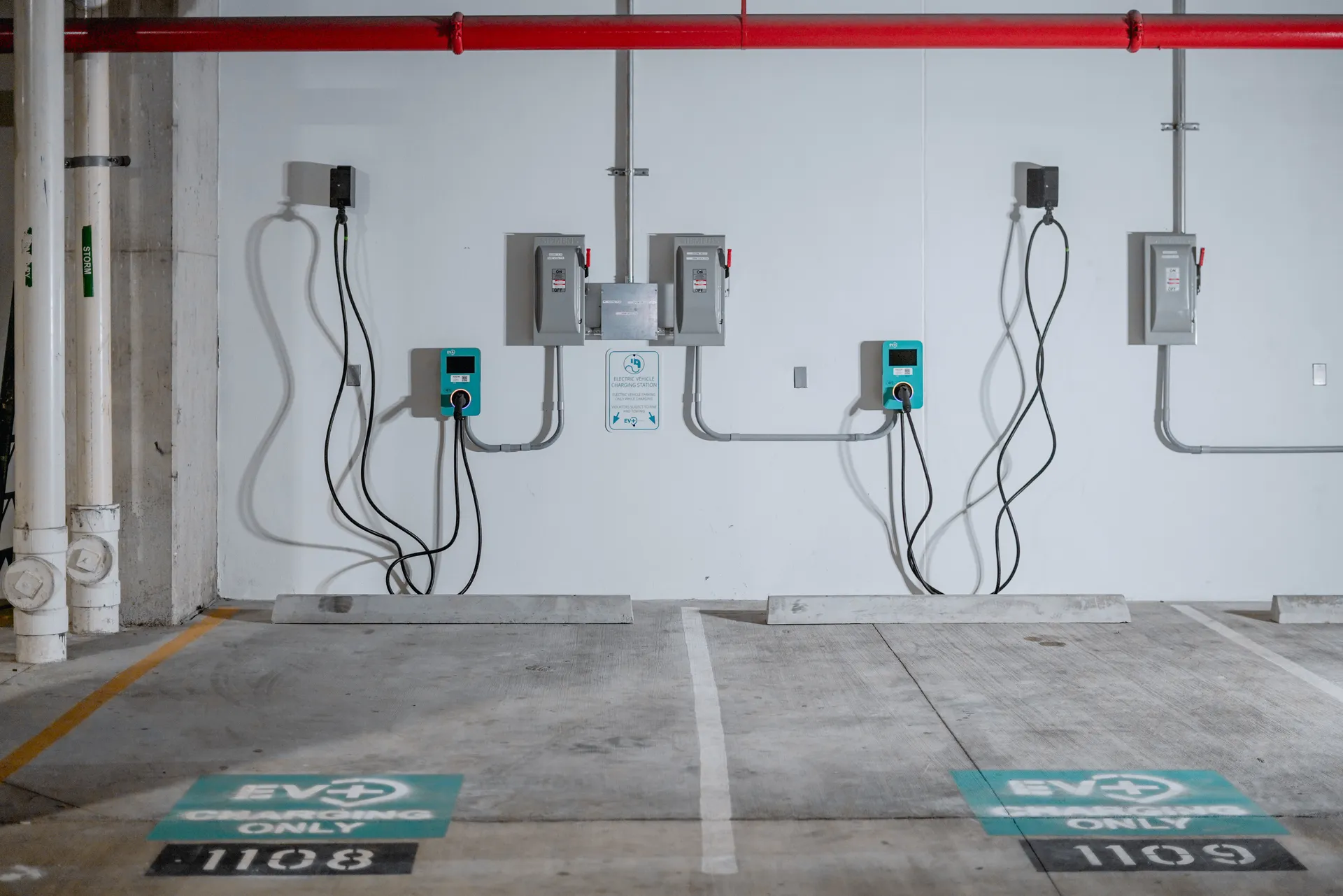
EV+ commercial bundles include a pre-matched Level 2 charger (Tesla Universal 48A, Autel AC Single 50A, or Autel AC Pro 80A), pedestal, bollard, signage, and network gateway in one order. No separate sourcing runs, no compatibility troubleshooting.
See commercial Level 2 installation bundlesWhy Level 2 Is the Right Choice for Commercial Properties
Three charging tiers exist in the U.S. EV ecosystem. For commercial property deployments, Level 2 wins decisively on the economics that matter:
| Charger Type | Power | Commercial Fit |
|---|---|---|
| Level 1 (120V) | 1.4 kW | Inadequate for nearly all commercial use |
| Level 2 (208/240V AC) | 6–19 kW | Optimal for 95% of commercial properties |
| Level 3 / DCFC (480V 3-phase) | 50–350 kW | Required only when dwell times are under 30 min |
For hotels, multifamily buildings, office campuses, and mixed-use commercial properties, Level 2 delivers a full charge in 4–10 hours — well within guest overnight stays, resident parking time, or a workday. DCFC's faster charging speed comes with utility upgrades that can outweigh every other line item combined, and it's only useful at sites where vehicles can't sit longer than 30 minutes.
What Defines a Quality Commercial Level 2 Deployment
Hardware specifications are only part of the picture. A commercial Level 2 program that actually generates NOI requires more than just buying ChargePoint, EVBox, or Blink units off the shelf:
How EV+ Delivers Commercial Level 2 Charging
EV+ provides commercial Level 2 charging programs end-to-end under a subscription + revenue share model:
EV+ funds 100% of design, equipment, installation, networking, and ongoing maintenance — the property pays no upfront installation cost.
Subscription + revenue share economics. Property pays a monthly subscription fee per charger and keeps 80% of charging revenue.
Right-sized system design based on actual driver demand at the property, with load management built in from day one.
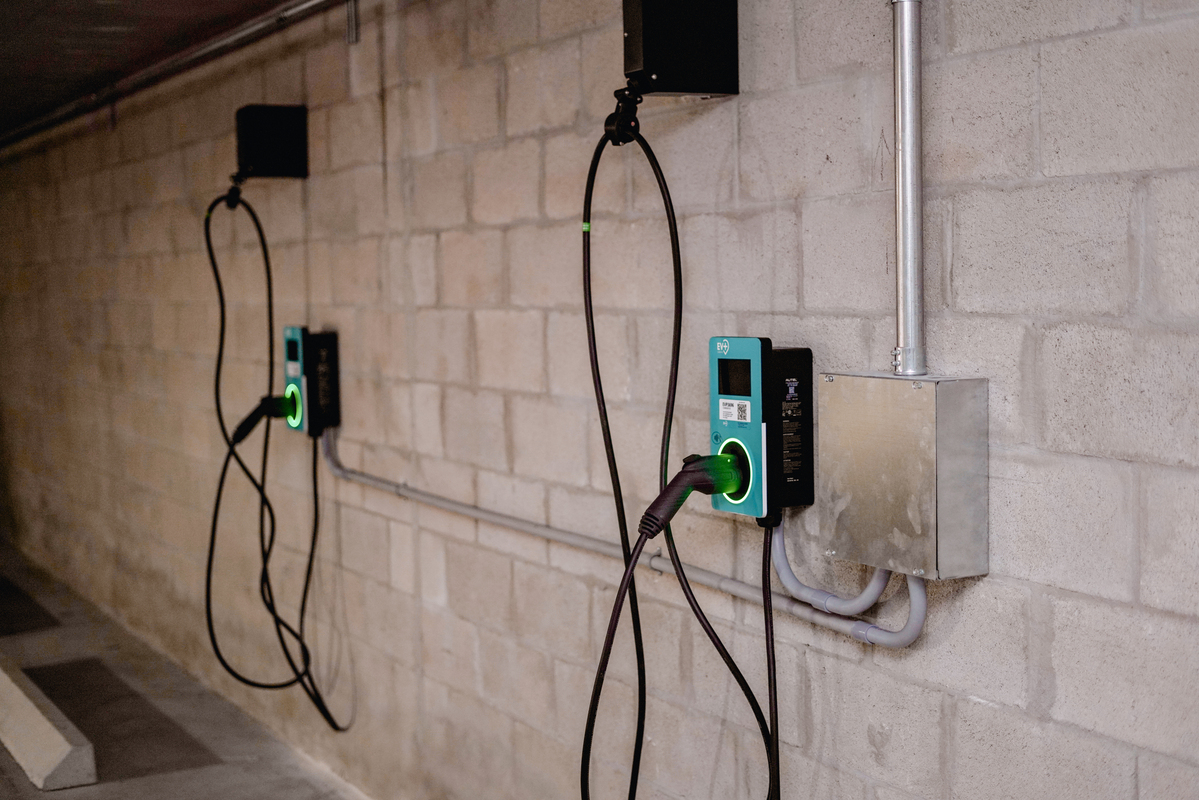
Networked, ENERGY STAR certified Level 2 hardware with cellular connectivity, payment integration, and remote diagnostics.
99.7% uptime maintained through proactive monitoring and rapid response.
24/7 driver support: every charging issue routed to EV+, never to property staff.
Performance guarantee with refund if utilization targets aren't met.
Federal and utility incentives captured directly by EV+ and applied to the project — no paperwork or timing risk on the property side.
Level 2 by Property Type
Hotels & Resorts
Overnight guest dwell times make Level 2 the only charging type worth deploying. EV charging is now the #2 booking filter on Hilton.com.
Hospitality EV charging detailsMultifamily
Resident overnight parking is the perfect Level 2 use case. 2025 CalGreen now requires Level 2 receptacles on 70–100% of multifamily parking spaces.
Multifamily EV charging detailsWorkplace & Offices
A full workday provides more than enough time for Level 2 to deliver a full charge. Workplace charging is a talent attraction and retention amenity.
Workplace charging detailsFrequently Asked Questions
How long does a Level 2 charger take to charge an EV?
Level 2 chargers (208V or 240V AC, typically 6–19 kW per port) add 25–40 miles of range per hour and fully charge most EVs in 4–10 hours depending on battery size. This matches overnight hotel and multifamily resident dwell times, and full-workday workplace parking — which is why Level 2 is the right choice for nearly all commercial property deployments.
When does a commercial property need Level 3 / DC fast charging instead of Level 2?
Only when typical vehicle dwell time is under 30 minutes — highway corridor convenience stores, truck stops, fleet depots with high turnover, or short-dwell retail. For everywhere else, DCFC costs 10–20x more per port to install, requires 480V three-phase service plus a utility transformer upgrade, and adds ongoing demand charges that erode net economics.
Does EV+ provide Level 2 chargers or does the property buy them?
EV+ funds, owns, installs, and maintains the chargers under a Charging-as-a-Service model. The property pays no upfront cost for equipment or installation. The economic model is a subscription fee plus revenue share: the property pays a monthly subscription per charger and keeps 80% of charging revenue. EV+ uses ENERGY STAR certified networked Level 2 hardware with the features required for commercial deployment — dynamic load management, payment integration, RFID, cellular connectivity, and remote diagnostics.
Can a property add EV+ Level 2 chargers without upgrading the electrical service?
In many cases, yes. EV+'s system design includes dynamic load management as a standard, which spreads available power across all connected ports rather than dedicating peak capacity to each. This routinely avoids utility service upsizing and panel replacements (even at older buildings) and shortens project timelines significantly.
What's the difference between EV+ and providers like ChargePoint, EVBox, or Blink for Level 2 commercial charging?
Those providers sell hardware — the property buys the chargers and pays for installation, then either operates the chargers themselves or contracts an operator. EV+ funds the entire program with no CapEx required and operates it on the property's behalf under a subscription + revenue share structure. The property pays no capital, no operations cost, and no incentive paperwork (only a predictable monthly subscription per charger) and receives 80% of the charging revenue.
Bottom Line
For hotels, multifamily buildings, office campuses, and mixed-use commercial properties, Level 2 is the right charger type — overnight and workday dwell times make faster charging unnecessary and dramatically more expensive.
The remaining decision is who funds and operates it. EV+'s no-CapEx-required Level 2 deployment converts commercial EV charging from a capital expense into a predictable operating program: monthly subscription per charger as the only ongoing cost, 80% revenue share back to the property, performance guarantee with refund, and 99.7% uptime backed by 24/7 driver support.
See what Level 2 charging generates at your property