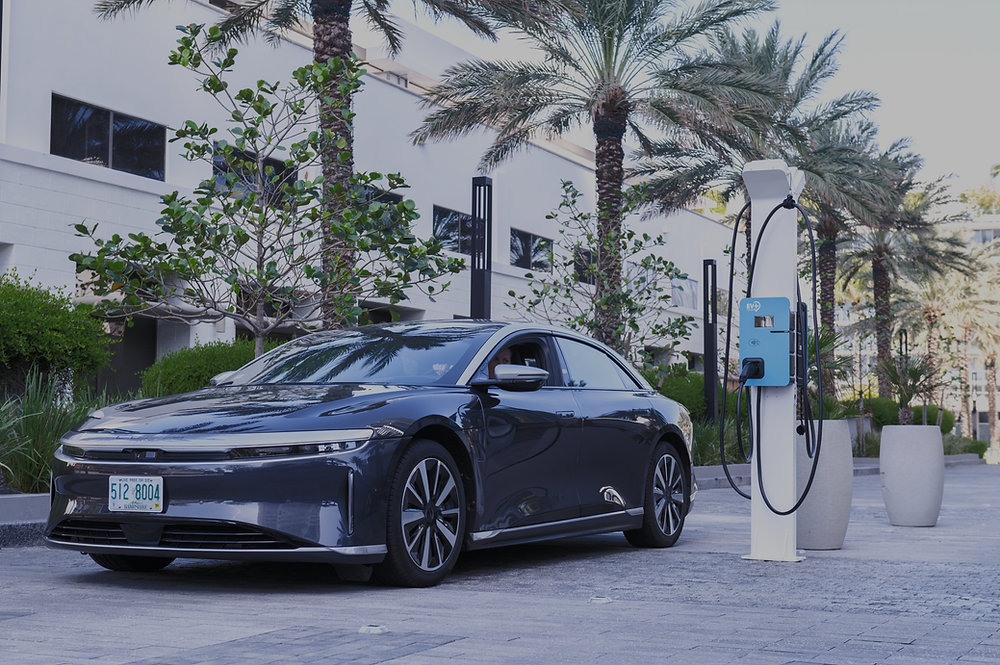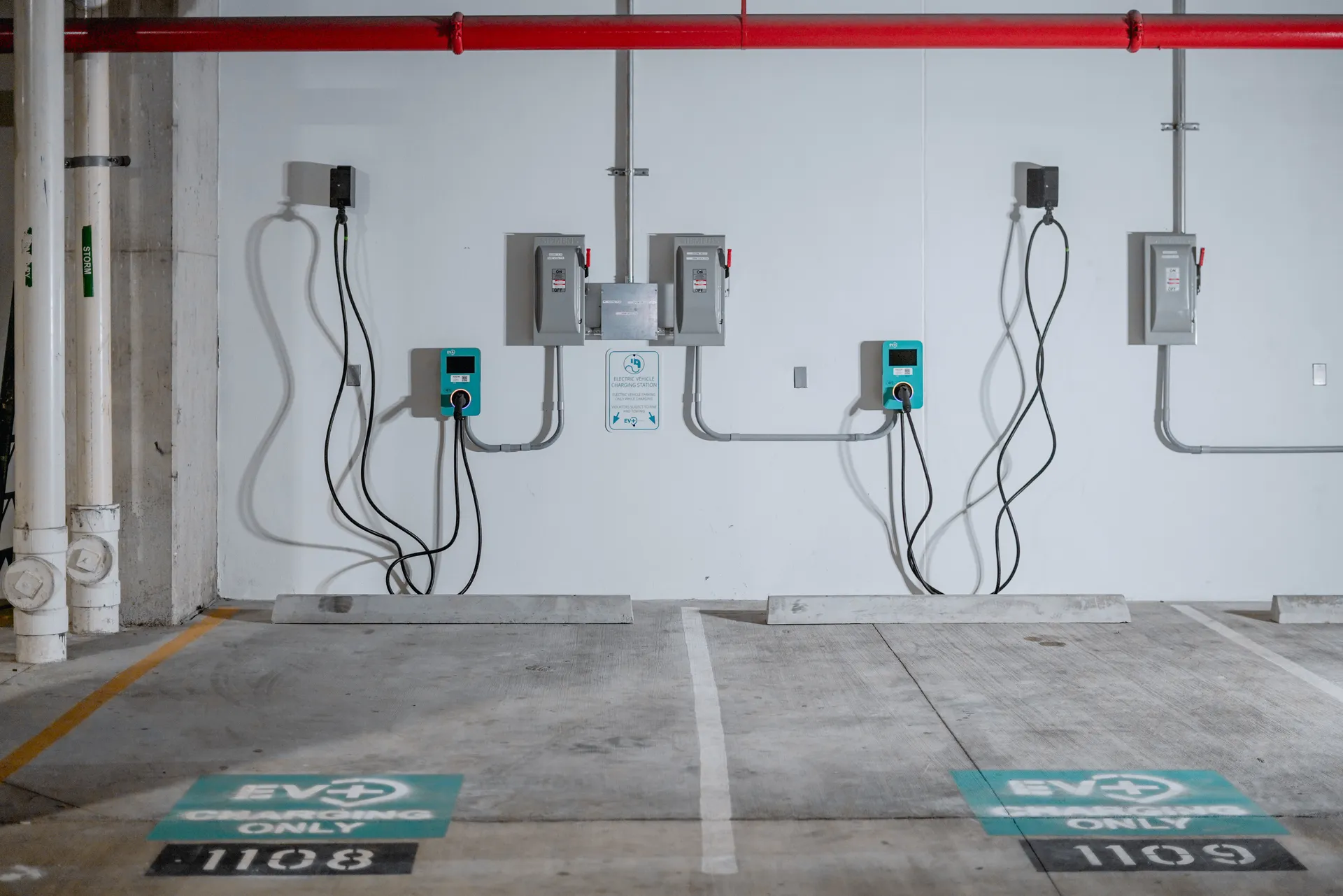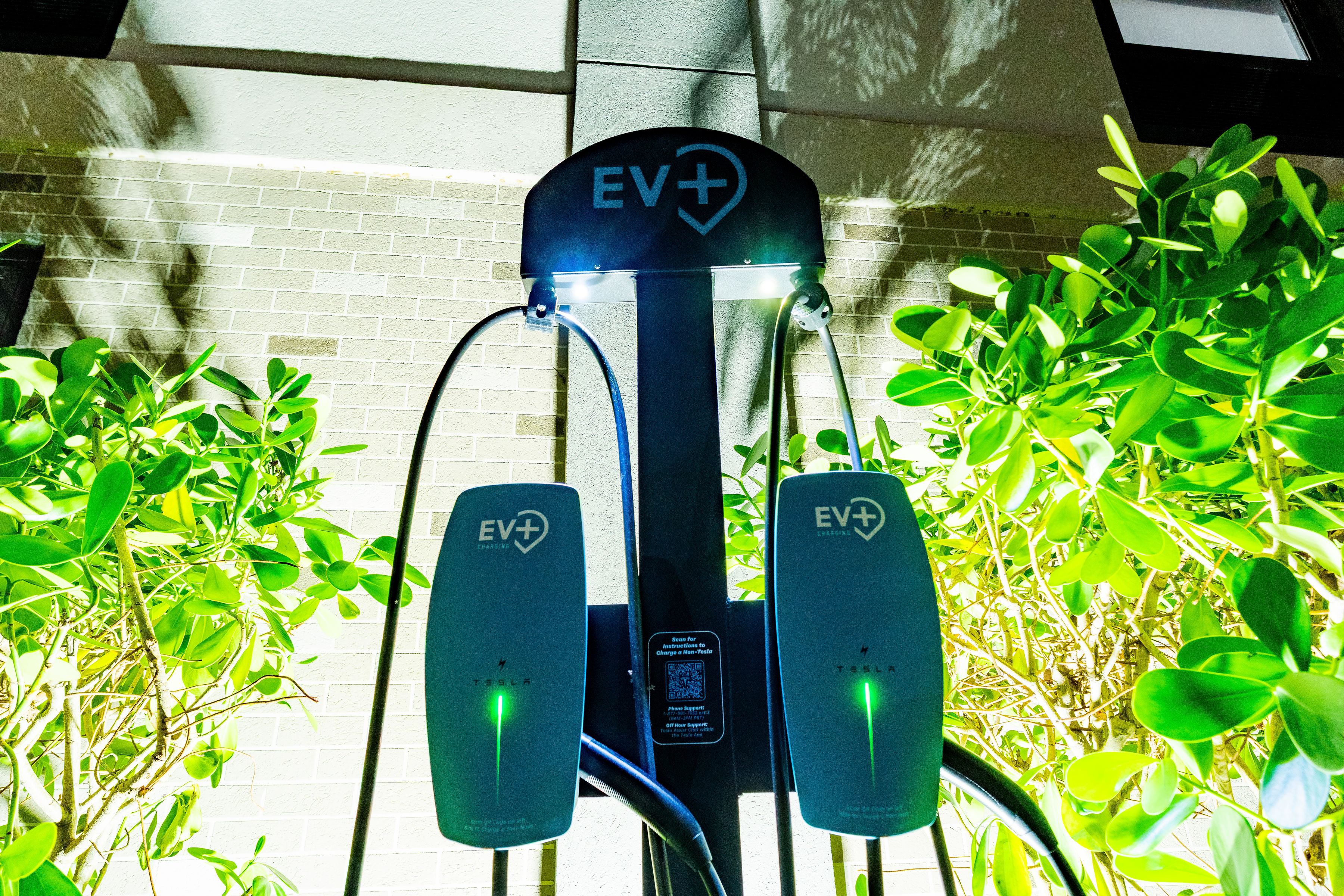
EV Charging Has Become a Core Hospitality Amenity
Electric vehicle adoption is reshaping how hotel guests choose where to stay. EV drivers represent a growing, high-income demographic: they book earlier, stay longer, and return at a higher rate than average guests. And they filter for EV charging before they filter for almost anything else.
For hotel owners and asset managers, EV charging is no longer an amenity question. It is a revenue and occupancy decision.
Holiday Inn Express & Suites, Florida
A Holiday Inn Express & Suites in Florida deployed Level 2 EV charging through EV+ with no capital outlay.
May alone generated over $12,000; July over $11,000. Hotel staff managed zero operational details.
Read the full case studyThe Challenge: Why Hotels Delay EV Charging Deployment
Most hotel operators understand that EV charging affects bookings. What slows deployment is the capital and operational question: who funds the infrastructure, who manages it, and what happens when a charger goes offline at 2 AM?
Capital outlay
A self-funded hotel EV charging project requires electrical assessments, potential panel upgrades, trenching across parking areas, equipment procurement, installation, and network commissioning — a multi-month capital project, not a product purchase.
Operational burden
Networked chargers require 24/7 monitoring, driver support, billing infrastructure, software updates, and maintenance. Most hotel engineering and front-desk teams are not staffed for this.
Guest experience risk
A broken or inaccessible charger during a guest's stay damages the hotel's reputation faster than not having chargers at all. Reliability and guest support are not optional.
Incentive complexity
The federal Section 30C tax credit (30% of project costs, capped at $100,000 per property) requires documentation, utility coordination, and correct equipment placement — a process most ownership groups have never navigated.
These are solvable problems. The question is whether a hotel owner wants to solve them internally or work with a partner who handles every component under a single managed agreement.
How EV+ Delivers Hotel EV Charging
"Most charging companies sell hardware. EV+ delivers Net Operating Income."
EV+ funds, installs, and operates Level 2 J1772 charging networks for hotels end-to-end, across 43 states. The economic model is a subscription fee plus revenue share: the property pays no upfront installation cost, pays a monthly subscription fee per charger, and keeps 80% of charging revenue. EV+ retains the subscription fee plus the remaining 20% revenue share. The subscription covers driver support, monitoring, maintenance, repairs, software, and billing infrastructure. A performance guarantee with refund protects the property if utilization targets are not met.
Key Benefits for Hotel Properties
No CapEx required: EV+ funds 100% of design, equipment, installation, networking, and ongoing operations. The property pays no upfront installation cost.
Subscription + revenue share economics: Monthly subscription per charger plus 80% of charging revenue to the hotel; EV+ retains the subscription fee and 20% revenue share.
Guest experience managed end-to-end: 24/7 driver support, 99.7% uptime, and proactive maintenance mean the charging experience reflects well on the property without requiring staff involvement.
PlugShare and Google Maps visibility: EV+ manages charger listings on PlugShare and navigation platforms, making the hotel discoverable to EV drivers planning trips.
Performance guarantee with refund: If utilization targets are not met, EV+ offers a refund. No hotel-owned deployment offers this guarantee.
Right-sized for hotel demand: System designed for actual dwell-time patterns (overnight stays of 6 to 12 hours), not generic commercial specs.
43-state coverage: Multi-property portfolios managed under a single operating agreement with consistent standards and reporting.
How It Works
Site Assessment
EV+ evaluates the hotel's parking layout, electrical capacity, and guest EV profile to design the right Level 2 system for current demand and projected growth.
System Design
Engineers specify the Level 2 J1772 deployment for overnight dwell-time patterns, including load management to minimize utility cost and maximize port availability during peak check-in windows.
Installation
EV+ handles all permitting, utility coordination, trenching, electrical work, equipment installation, and network commissioning. Hotel operations are not disrupted.
Ongoing Operations
EV+ monitors uptime around the clock, handles all driver support, manages maintenance and repairs, and processes billing. The hotel receives monthly revenue statements and performance reports.
Self-Funded Hotel EV Charging vs. EV+ Managed Deployment
| Factor | Self-Funded Installation | EV+ Managed Deployment |
|---|---|---|
| Upfront cost | Full capital project funded by property | No CapEx required |
| Ongoing economics | Net revenue after ops costs; property absorbs all variability | Monthly subscription per charger; 80% revenue share to hotel |
| Maintenance and uptime | Property responsibility; separate service contract | 99.7% uptime managed by EV+; included in subscription |
| 24/7 driver support | Front desk or separate contract required | EV+ handles all guest charging support; staff not involved |
| PlugShare / navigation listing | Property manages independently | EV+ manages; hotel becomes searchable to EV drivers |
| Performance guarantee | None | Refund if utilization targets not met |
| Incentive capture | Property navigates Section 30C, utility rebates | EV+ captures and applies incentives to project |
| Right-sizing for demand | One-time design; property bears undersizing risk | EV+ designs for actual demand; portfolio scalable |
Frequently Asked Questions
How does hotel EV charging affect bookings and revenue?
EV charging is now the #1 booking-conversion search filter on Hilton's platform, outranking pools and free breakfast. 48% of EV drivers say they will not stay at a hotel without onsite charging. EV+ hotel deployments add two revenue streams: charging session fees (of which the hotel keeps 80%) and incremental room nights from EV drivers who would otherwise book a competitor. A Florida Holiday Inn Express generated $96,836 in new annualized revenue with zero upfront investment.
What type of EV charger is right for a hotel?
Level 2 J1772 charging (208 to 240V, 7 to 11.5 kW per port) is the standard for hotel deployments. Guests park overnight for 6 to 12 hours — precisely the dwell time Level 2 chargers are designed for. A properly sized Level 2 deployment delivers a full charge from near-empty within a single overnight stay. EV+ deploys Level 2 J1772 exclusively for hotel properties; DC fast charging is not necessary or cost-effective for overnight hospitality use cases.
What does a hotel EV charging installation cost?
For properties working with EV+, the upfront installation cost is zero. EV+ funds 100% of design, permitting, equipment, installation, and ongoing operations. The ongoing structure is a subscription fee plus revenue share: the hotel pays a monthly subscription per charger and keeps 80% of charging revenue. EV+ retains the subscription fee and the remaining 20%.
How does EV+ handle 24/7 driver support at hotels?
EV+ provides dedicated 24/7 driver support for all charging sessions. Guests with charging questions, payment issues, or equipment concerns contact EV+ directly — not the hotel front desk. Hotel staff are completely uninvolved in day-to-day charging operations. EV+ also manages PlugShare listings and navigation platform data, so hotels are discoverable to EV drivers before they book.
Can a hotel deploy EV charging with no upfront cost?
Yes, through EV+'s Charging-as-a-Service model. EV+ funds the full installation with no CapEx required from the property. The hotel pays a monthly subscription per charger and keeps 80% of charging revenue. A performance guarantee with refund applies if utilization targets are not met. The Holiday Inn Express case study demonstrates the model: $0 upfront, $96,836 in new annualized revenue, 99.7% uptime, 10/10 PlugShare score, and zero operational burden on hotel staff.
Bottom Line
EV charging has moved from a niche amenity to a core booking driver. Hotels without it are losing EV-driving guests to competitors who have it. Hotels with it are generating new revenue streams, earning higher PlugShare scores, and extending guest stays.
EV+'s no-CapEx model converts a capital project question into a revenue opportunity: monthly subscription per charger as the only ongoing cost, 80% charging revenue share as the recurring upside, and a named case study proving the outcome.
See what hotel EV charging generates at your property